

Last week we saw temperatures plummet with most of Kent covered in snow and ice. Life is tough enough for our over wintering birds but how do they cope with freezing conditions and what can we do to help? Ranger Mel takes a look at what the cold snap means for our feathered friends.
In our blogs and articles, we regularly talk about our overwintering waders, ducks and geese arriving here in the Autumn, back from their breeding grounds in the Arctic. By this we mean northern Scandinavia, Greenland, Canada, Siberia but also Iceland and northern continental Europe too, neither of which are above the 66 degree of latitude. A few degrees north or south is neither here nor there because what migratory birds are looking for are the best conditions in which to mate, lay their eggs and raise the chicks.
 And when we say ‘Arctic’ what weather comes to mind?…maybe freezing conditions, blizzards, continual ice and snow? Well, yes – but mainly in the winter. The birds are up there in the spring/summer when the big thaw has begun, temperatures are higher, days are longer, Tundra grass is growing and providing cover for nests and chicks – and the invertebrates and insects are hatching as a nourishing food source for their young. Conditions can still be harsh though and the better weather does not last long. Once it starts to get colder and darker – they head south to us for our relatively mild autumn/winter conditions. Like most migratory birds – they are following the food resources and survival temperatures.
So, how well equipped are they to deal with the freezing Siberian-like conditions which have enveloped the UK last week? Birds that spend their winters swimming, diving and paddling in cold water have developed some adaptations that allow them to survive wintery conditions. Their feet, legs and bills (bare parts) require warmth too and their circulatory system has evolved to minimise heat loss from those body parts not covered in down or feathers.
 ‘Counter current’ is the side-by-side pairing of opposite flows, here referring to the venous and arterial blood flows. In the bills and feet, the veins transporting cool, ‘used’ blood back to the heart, and the arteries transporting warm, oxygenated blood in the other direction, are intertwined so that arterial heat is transferred to venous chill and vice versa. This allows for a more stable temperature of these bare extremities and helps to minimize heat loss to the water. Mallard ducks are good example of this adaptation in action; they lose only 5% of their total body heat via their substantial, webbed feet.
Sadly though, many birds will still perish whilst the UK is in the grips of this extreme cold weather.
Unsurprisingly, past studies have shown that temperature and frozen ground conditions are important factors for increasing bird mortality and, wader mortality in particular, has been shown to substantially increase during periods of extreme cold weather.
Freezing temperatures, cold winds and regular hard frosts tend to increase a bird’s metabolic stress factor; important because it describes the body’s energetic demands. In short, a fall in temperature and/or increase in wind speed will increase an individual’s energetic demand and use up their stored fats, simply by staying still and hunkering down – depleting them of the necessary energy to survive unexpected extreme weather.
There are other factors which can hinder survival once freezing conditions take hold. The longer the freeze goes on, the more birds will perish due to a lack of food availability. This can be a species-dependent issue because of different food preferences, how they feed and where they feed. Harsh weather can affect all of these things to varying degrees.
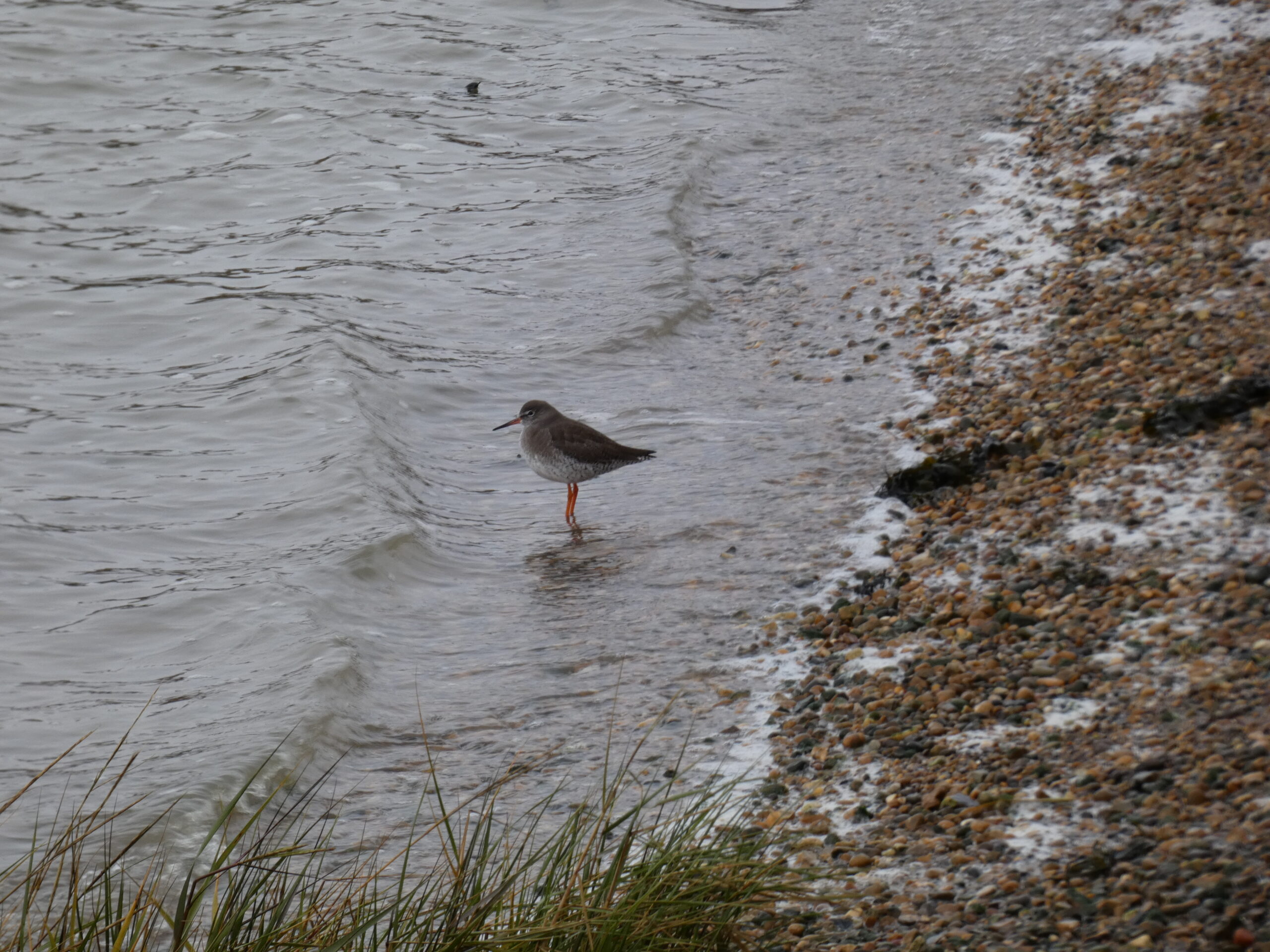 Redshanks can be particularly vulnerable because they tend to feed closer to the shore at low tide, or in shallow, muddy estuarine river channels where freezing is more likely.
Much has been written about the catastrophic effects the winter of 1962/63 had on birds. Freezing of shallow surface water and upper tidal mudflats limited many species access to their food source. On the Kent coast over 400 Shelduck were found dead; a direct result of them being unable to access their preferred food, the Layer Spire shell (Hydrobia ulvae), because the intertidal stretches froze over day after day.
Birds with a more of a specialist diet will perish more quickly than species who can adapt and move from say the mudflats, to a coastal field. Wigeon, for example, are more adaptable in terms of diet than Shelduck. That said, even those foraging opportunities can quickly disappear if covered by snow and ice for a prolonged period of time.
In fact, any period of unusually harsh UK weather will adversely affect birds. In February 1991, severe weather in the Wash in eastern England lasted for 20 days killing over 3000 waders – and in more recent times, the Beast from the East had a big toll on birds of all species – coastal, garden and birds of prey including owls; the latter being unable to find the large number of voles and mice needed daily for survival.
Intertidal organisms such as molluscs and Annelids (worms) living in the mudflats or sand will move deeper down into the substrate as the temperature drops, thus becoming unavailable to the shorter-billed waders, such as plovers. In fact, all the species of smaller waders with shorter bills will struggle. At just a few degrees above freezing many annelids and bivalves will be out of range of even a Curlew’s bill – i.e., deeper than 15cm.
 Size is also a mortality factor when the weather closes in. The more fat a bird has on board – the higher the survival rate. Larger birds are also more likely to survive because, proportionally, the energetic demands of smaller birds are greater. Smaller birds have a lower surface area to volume ratio…in other words they need to generate more heat (relatively) to survive. This is energetically costly and if they are unable to feed, they are more likely to perish from starvation and exposure. In harsh weather mortality rates of Teal, our smallest migratory duck, are particularly high. This is a size issue but also because they forage in the (potentially frozen) shallows.
Adult birds are more likely to survive than juveniles because they will be more experienced at feeding. A first-winter juvenile is likely be a less efficient feeder – which, although part of the normal cycle of learning under more usual weather conditions, will make it much more susceptible to the effects of atypical weather.
Well, all this sounds a bit depressing doesn’t it! But, be uplifted to know that there are some things we can do to help. In the garden…keep the birdfeeders full and ensure water (of the unfrozen variety) is always available.
 If you are out and about you are likely to see flocks of waders huddled together, facing the wind, with head and bills tucked behind under their wings. In harsh environments individuals can increase their chances of survival by maintaining energy stores in the form of fat and protein that can be mobilized to provide fasting-endurance during extreme cold or reduced food availability.
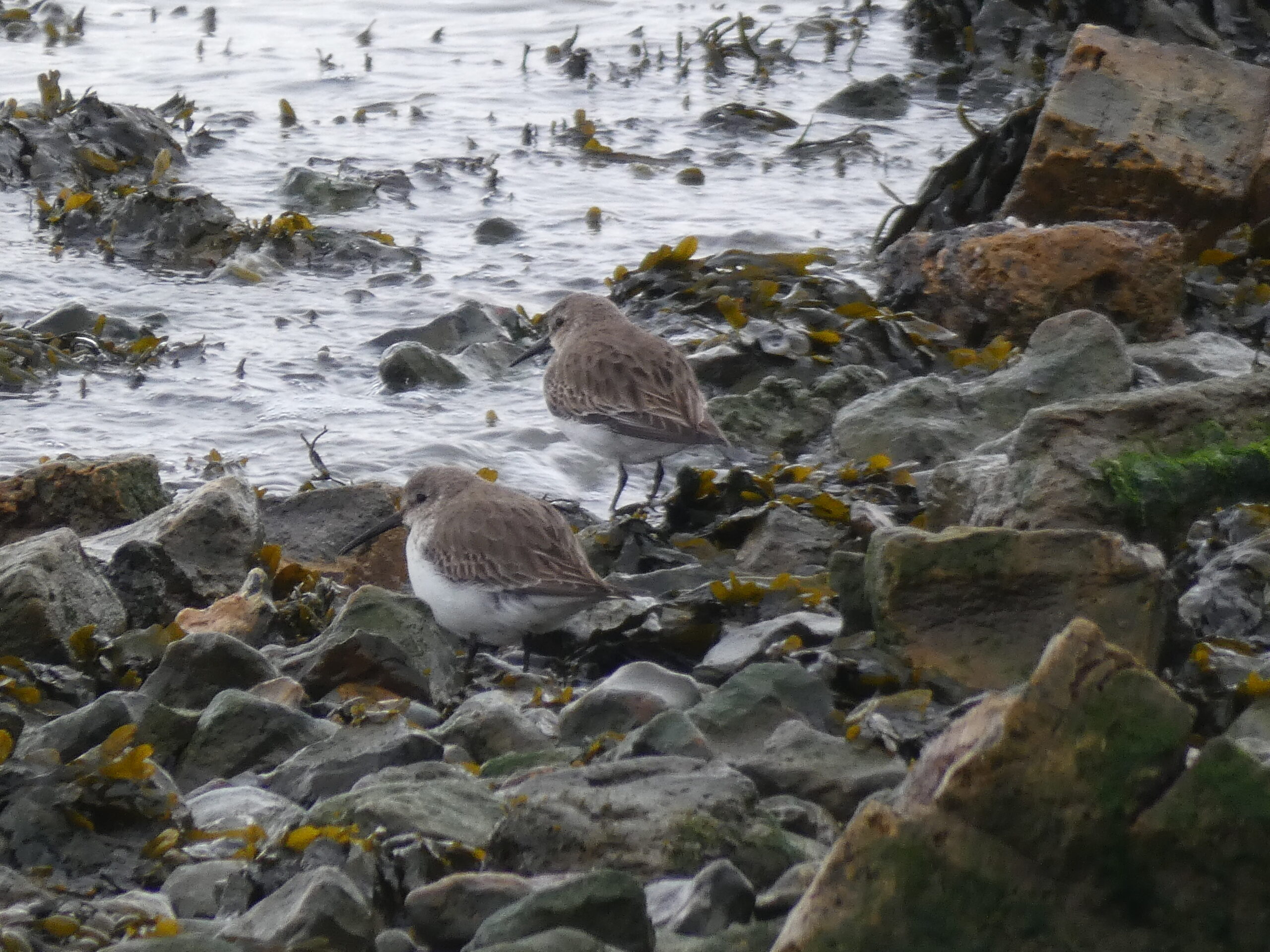
Some birds will stay close to the tide line as they wait for the tide to drop, like these pictured right. This may bring them closer to the path than normal. Think of the energy they will need to stay warm and try and keep your distance – with your dog, if you have one, on the lead. In these freezing conditions, it’s not too dramatic to state that any energy wasted getting away from us and our canine friends can be the difference between life and death, especially if it is happening repeatedly in any one day.
Keep safe, enjoy your time outside and let’s look forward, with the birds, to a warming spring.