

Many of our favourite ducks, geese and waders have left us for now, but never fear, there is still plenty to look at. In this blog, Ranger Julie brings us some of the more frustrating birds to identify, the LBJs.
Let’s talk about LBJs. For those of you not in the know this means Little Brown Jobbies. The term encompasses all those tiny flitting birds which, during the spring and summer, move through the trees or reeds and give us tantalising views which are completely inconclusive as to what they are!
If you are on the marshes and are near the ditches which run through many of them you will see divided sedge (Carex divisa). This is the tall wavy plant which sways in the breeze and grows approximately half a meter tall. It provides a place for our visiting marsh LBJs to feed, hide and nest. In the absence of trees on the marshes this is where they head for, but also remember to check out bushes and thickets as many of the LBJs like dense cover.
Warblers are notoriously difficult to identify (that’s why I prefer winter wader bird watching!) so let’s start with the easiest. The Chiffchaff (Phylloscopus collybita). Unlike species where the name refers to how they look, such as Redshank, the Chiffchaff gained its name from its call. Yes, it simply calls ‘chiff chaff’ over and over again. We do have some resident in the winter and according to the RSPB approximately 500-1,000 birds are continually with us. They are swelled by up to 60,000 new arrivals in summer. These new arrivals come from Africa as it’s too hot for them to nest there during summer. The heat would make the chicks stick to the inside of the egg and they would die as a result. Our climate is much more welcoming and we have a large selection of spring emerging bugs for them to refuel on and feed their chicks with.

Chiffchaffs are a member of the Warbler family. Males and females look identical. They are an olive-brown colour on their head, back and tail with a pale white underneath and a biscuit coloured streaky front. They have black edges on their wing feathers and a greyish cheek piece. One thing to really focus on with warblers is head colour, the Chiffchaff has a dark coloured stripe running in a line from its beak through its eye and ending just above its cheek piece. It has a thin white crescent of tiny feathers underneath its eye socket. In addition it has thin dark coloured, almost black legs.
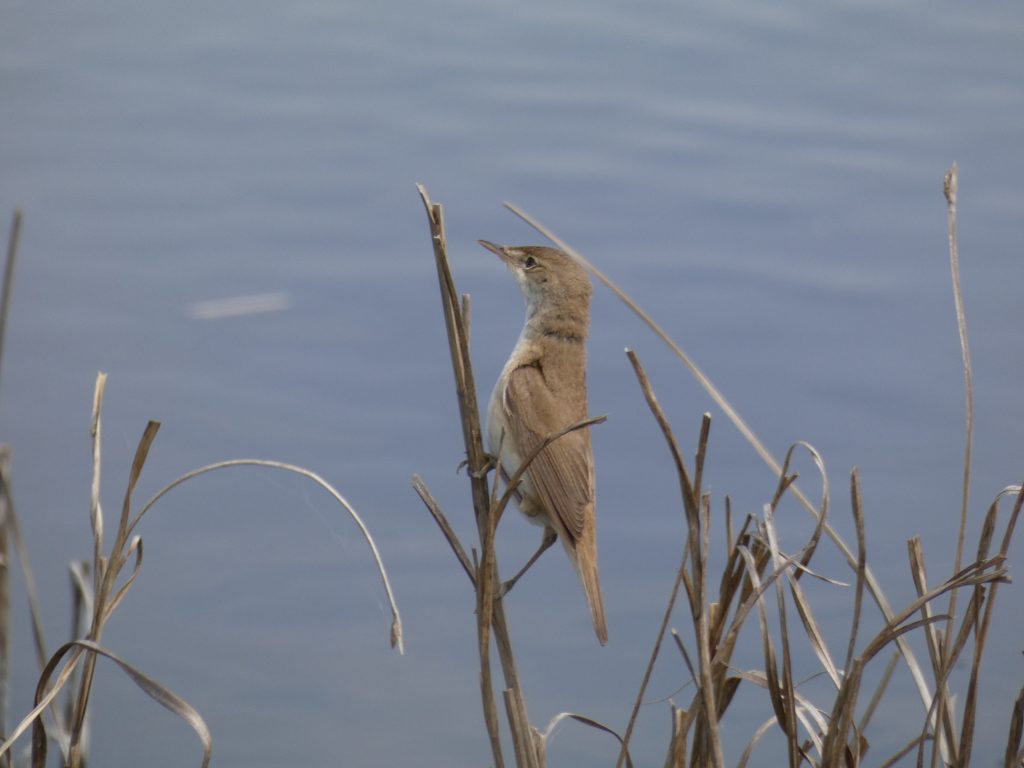
Another warbler which we have in the area is Cetti’s warbler, which is pronounced Chetty. They are notoriously difficult to spot, although they do sometimes like to sit on scrubby bushes, so there is a chance. If you do see one you might at first mistake a Cetti’s for a Wren as, when threatened or defending their territory, they sit with their tail pointed upwards and move around on their perch to survey the potential danger or rival. Their call is ear splitting for such a small bird, a really really strident ‘Chich, chich, chich’ noise, very metallic and not at all melodious. With all warblers you really need to sit and pore over images of them in order to get them straight in your head. A view in the wild may be very fleeting and if you can get a photograph of them to take home to help with the identification that can really help. I’ll leave you to look up Sedge Warblers and Reed Warblers on your own but here are a couple of pictures to get you started!

Other small LBJs, which hide in the edge of the marshland ditches, include Reed Buntings. Males have a black head with a white neck collar and white vertical stripe running from this up the cheek towards the beak. Whitish underside and brown wings and tail with pronounced black stripes. Females have a brown streaked head, a tiny grey collar and a brown and black streaked back which is paler than that of the male.

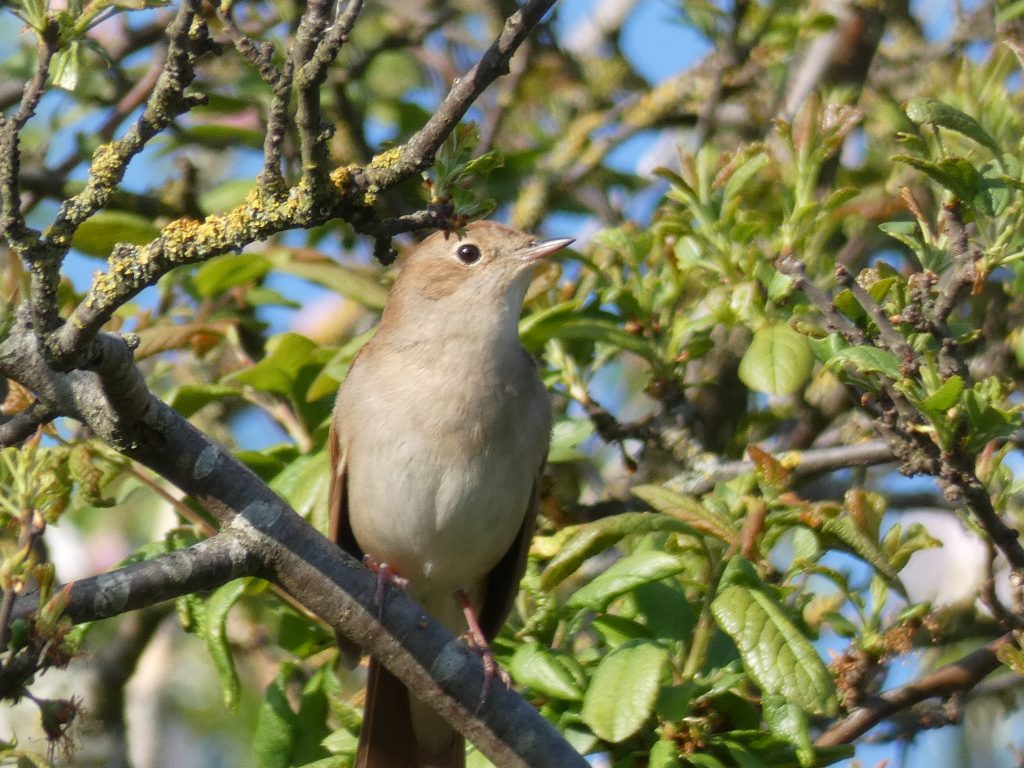
What many of the LBJs lack in appearance, they more than make up for with song, and the best example of this is perhaps the Nightingale. Found in dense thickets you will be lucky to spot one but you will certainly know if they are there, as the males have a repertoire of over 1000 different sounds that they sing throughout the day and night.
Another warbler with an impressive song is the Whitethroat, which helpfully has a white patch around its throat to help with identification. It can also be found in dense, scrubby habitat, the males often perched at the top of a bush singing a loud, scratchy song.

They don’t all hide in bushes and reeds though, for the Skylark you need to look up. Males rise vertically from the ground, high into the sky where it remains for several minutes, fluttering and singing its melodic song before parachuting back down to the ground. Skylarks are resident all year round but can be heard singing through spring and summer.

All these LBJs tend to hate windy weather so a calm, still day is the best time to go out and catch a glimpse. Enjoy!