

Recent heatwaves across the UK have brought record-breaking temperatures and prolonged dry spells — and it’s not just people who feel the strain. Birds, like all wildlife, must find ways to cope with extreme heat, often in surprisingly clever ways.
Keeping cool without sweat
Unlike humans, birds don’t have sweat glands, so they rely on a combination of physiology and behaviour to control their body temperature.
One of the main methods is evaporative cooling. When you see a bird sitting with its beak open, it’s not just “panting” — it’s using a process called gular fluttering, where rapid vibrations of the throat lining increase airflow and allow heat to dissipate. Some species also use panting in a similar way, though this comes at a cost: it increases water loss, which can be risky during dry conditions.
Birds can also regulate heat through their feathers and blood flow. By slightly raising their feathers, they allow air to circulate close to the skin. At the same time, blood flow to bare or less-feathered areas (such as legs, beak, and around the eyes) can increase, helping release excess heat into the air.
However, birds have a higher normal body temperature than humans (often around 40–42°C), meaning extreme heat can quickly push them close to their limits — especially if water is scarce.
Life on the coast in extreme heat
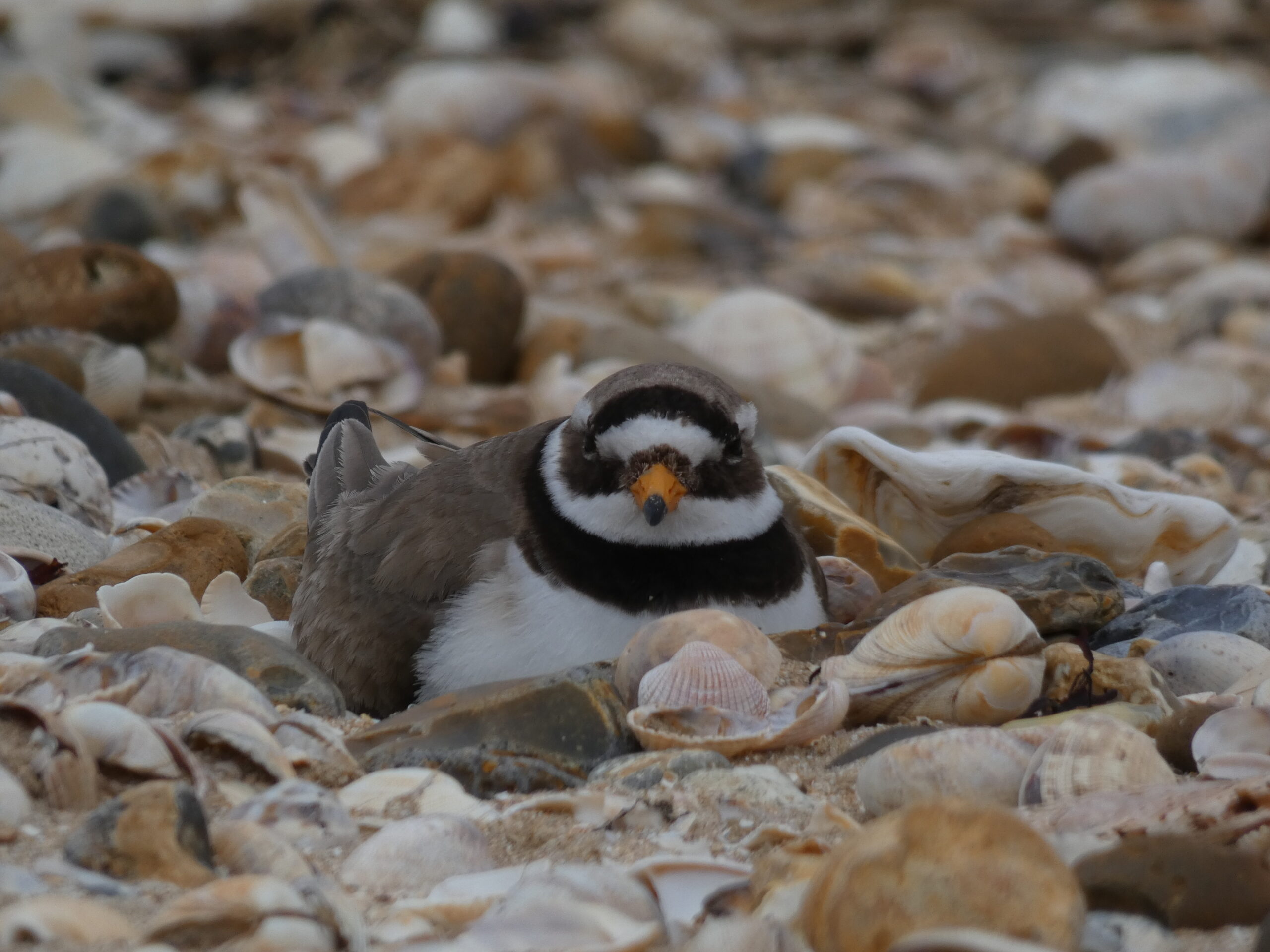
Ringed Plover on nest
For coastal birds around North Kent — such as oystercatchers, ringed plovers, little terns and gulls — extreme heat presents a unique set of challenges.
Open coastlines and mudflats offer very little natural shade, leaving birds exposed to direct sun for long periods. On hot days, you may see birds standing still with their wings slightly drooped away from their bodies to allow heat to escape, or facing into the breeze to stay cool.
Ground-nesting species like little terns and ringed plovers are particularly vulnerable. Their nests are often simple scrapes in the sand or shingle, making eggs and chicks highly exposed to overheating. Adults may spend more time shading their eggs or chicks with their bodies or wings, which can reduce the time available for feeding. Last year, our beach-nesting ringed plovers and oystercatchers endured 4 periods of heatwaves during the nesting season. On camera, we observed them visibly panting as temperatures on the exposed shingle climbed, and watched them stand over their eggs with wings out to provide shade and reduce temperature exchange.
The importance of water and mud
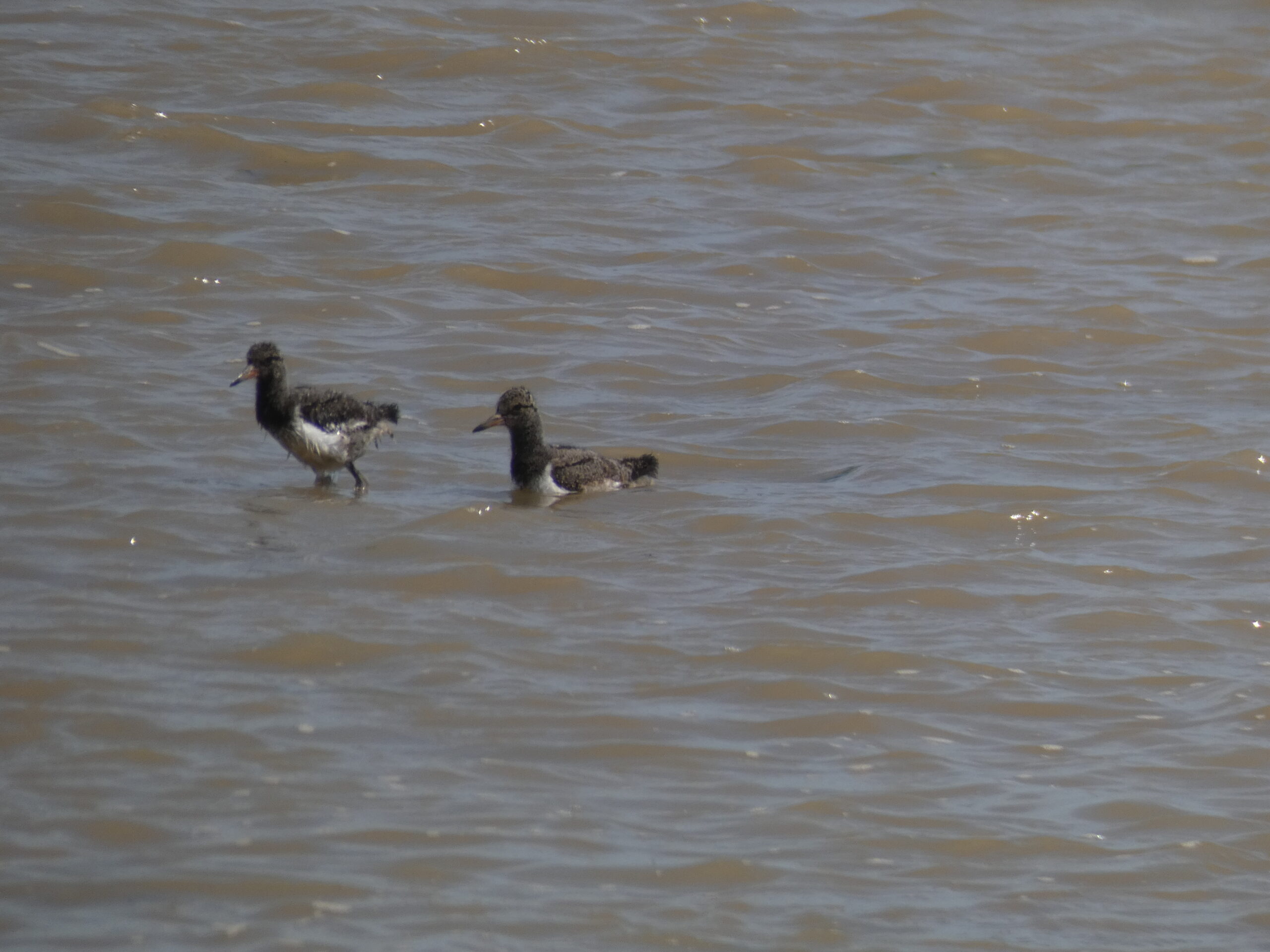
Oystercatcher chicks
Water plays a crucial role in helping birds cope with heat — especially for species living on estuaries and along the shoreline. Wading birds can cool down by standing in shallow water, while gulls and terns often bathe to lower their body temperature. As you can see from this picture, last year’s oystercatcher chicks spent time cooling off in the water.
However, prolonged dry weather can change these habitats. Mudflats may dry and harden, and shallow pools used for feeding and cooling can disappear. This can make it harder for birds to find food like worms, shellfish and small invertebrates, as well as reducing opportunities to cool off.
Disturbance adds extra pressure
During hot weather, it becomes even more important for birds to conserve energy. If they are repeatedly disturbed — by people, dogs, or other activity — they may be forced to fly more often, using up energy and leaving nests or chicks exposed to the sun.
In popular coastal areas, this added pressure can significantly affect breeding success and survival, particularly during extreme conditions when people are, understandably, drawn to spend time at the beach.
How you can help
There are simple ways we can all support birds during hot weather:
- Respect protected areas and signage, especially where ground-nesting birds are present
- Keep dogs under close control to avoid disturbing resting or nesting birds
- Give birds space so they can rest, feed, and care for their young without stress
- In gardens, provide fresh, shallow water for drinking and bathing
Adapting to a warming climate
While birds are resilient, more frequent and intense heatwaves — like those seen in recent years — present growing challenges. Coastal birds are particularly exposed, with little shelter and increasing pressure on the habitats they depend on.
By protecting these important spaces and reducing disturbance, we can help ensure birds along the North Kent coast continue to thrive — even as temperatures rise.