
Ranger Helena was recently given an opportunity to join the Swale Wader Group for bird ringing on the Swale. In this blog she shares what it was like, and which birds were seen.
When people see us on site, they often ask us if we are counting the birds we see. I like to say – “no, we are counting the people!”. Here at Bird Wise, we keep an eye on how and why people use coastal sites in North Kent, as it gives us an idea of levels of potential bird disturbance.
However, there are groups who do count the numbers of birds on our shores and keep note of the varied species they see. One such group is the WeBS counters. WeBS stands for Wetland Bird Survey and the aim is to monitor the UK’s internationally important non-breeding waterbirds.
Another way that we can monitor how birds use our coastline is using bird ringing and identification. Bird ringing helps us understand changing populations of birds and can help assess bird survival.
I was lucky enough to be invited along to observe the Swale Wader Group on a ringing session, on the Isle of Sheppey in Kent, and to find out more about how and why bird ringing is done.
We met on site at 9pm, armed with waterproofs and wellies: the weather forecast promised a very wet night. The group is made up entirely of volunteers, and the Group has been ringing birds around the Swale since 1960. In that time, they have ringed over 26,000 birds.
How are the birds caught to be ringed?
A mist net was set up: a fine net between two poles over a pool, which traps the birds in flight as they come in from the mud at high tide. Experienced ringers who have received special training collect the bids from the net safely – this is called extraction. They are placed in a soft pouch to be taken somewhere safe for the next steps.
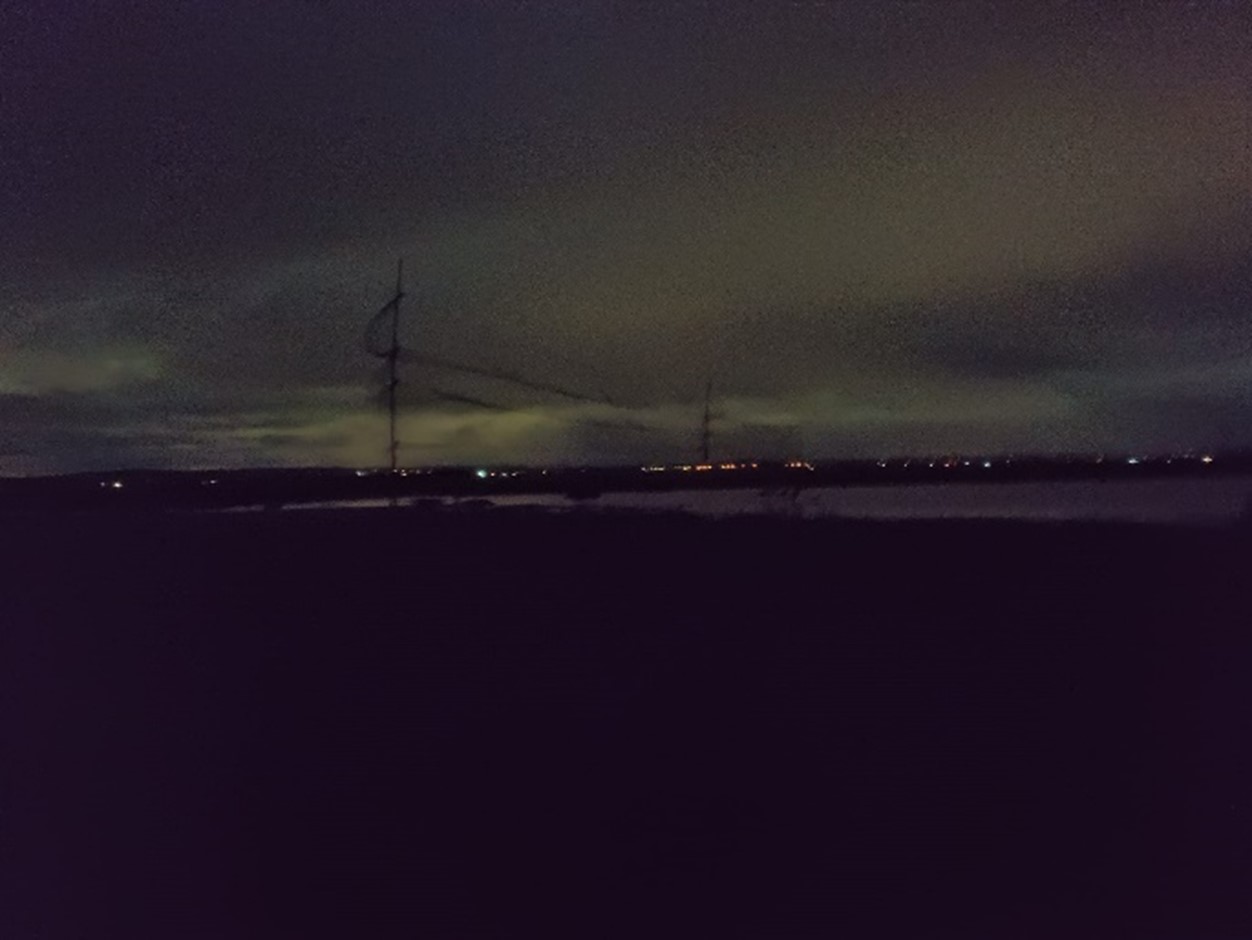
The mist net set up over a pool on the Isle of Sheppey, and an idea of working conditions during a night ringing session
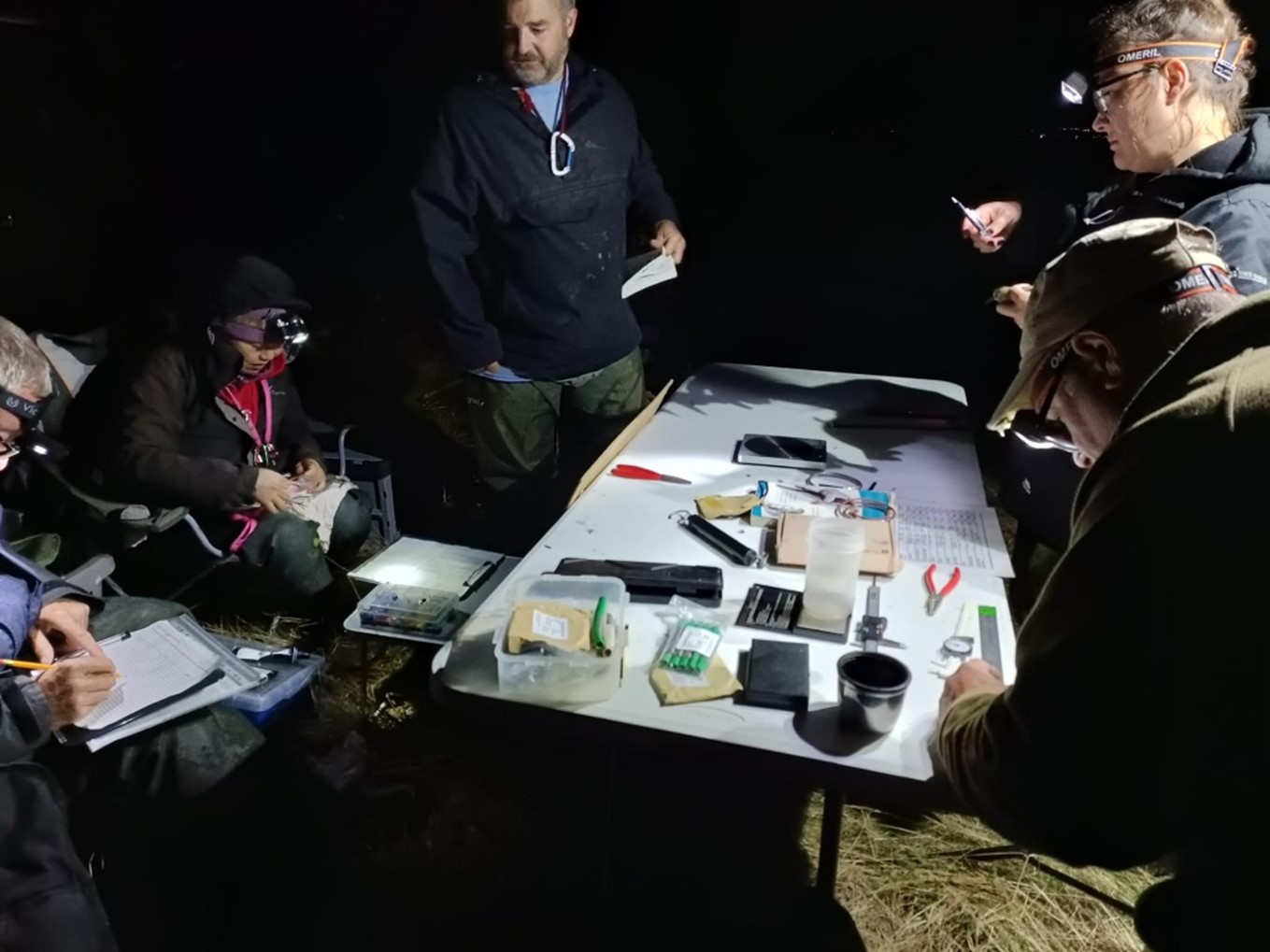
The Swale Wader Group taking measurements of the birds that have been caught in the mist net.
What do you do once the birds are caught?
The birds were then identified by species, weighed, measurements taken, and the age and sex of the bird were assessed. A lightweight, uniquely numbered metal ring is placed around the bird’s leg. Some projects also use colour rings.
Each ring has an address on it, so that the sighting can be reported. All of these important measurements were recorded and reported to the Ringing Unit, along with the corresponding codes.

A Whimbrel is a red listed bird that passes through Kent on migration
Why are birds ringed?
Birds can be identified as individuals by their rings. When people spot a ring on a bird they should record:
- which leg it was on (the bird’s left or right leg);
- what position it is on the leg (upper or lower); and
- the colour or code on the ring (or both).
They can then go online and report the ring sighting. This information can help to build a picture of that bird’s life: where they live, where they migrate or move to, how long they live, for example.
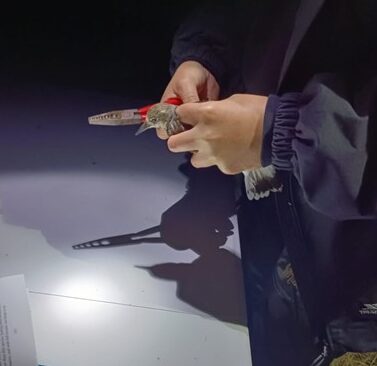
A volunteer applies a ring to a Turnstone’s leg
Does ringing affect the birds?
During the entire process, the birds were handled safely and with skill, and were not distressed. Bird ringers undertake years of training under supervision and are assessed and recognised under the BTO national ringing scheme. A BTO ringing permit is a legal requirement which is annually renewed. This means bird welfare standards and data quality standards are high. If ringing is undertaken by skilled ringers, birds aren’t affected.
We headed back to the car at 2:15am, having ringed 20 new birds that night. The Group will continue to ring birds between July and the end of the year.
Further information
If you would like to find out more about the Swale Wader Group you can visit their website here.
If you see any birds with colour rings you can report your sightings with the BTO or the Wader Study Group.
For more on the Wetland Bird Survey visit the BTO here.